Swimming Lessons in Craigieburn
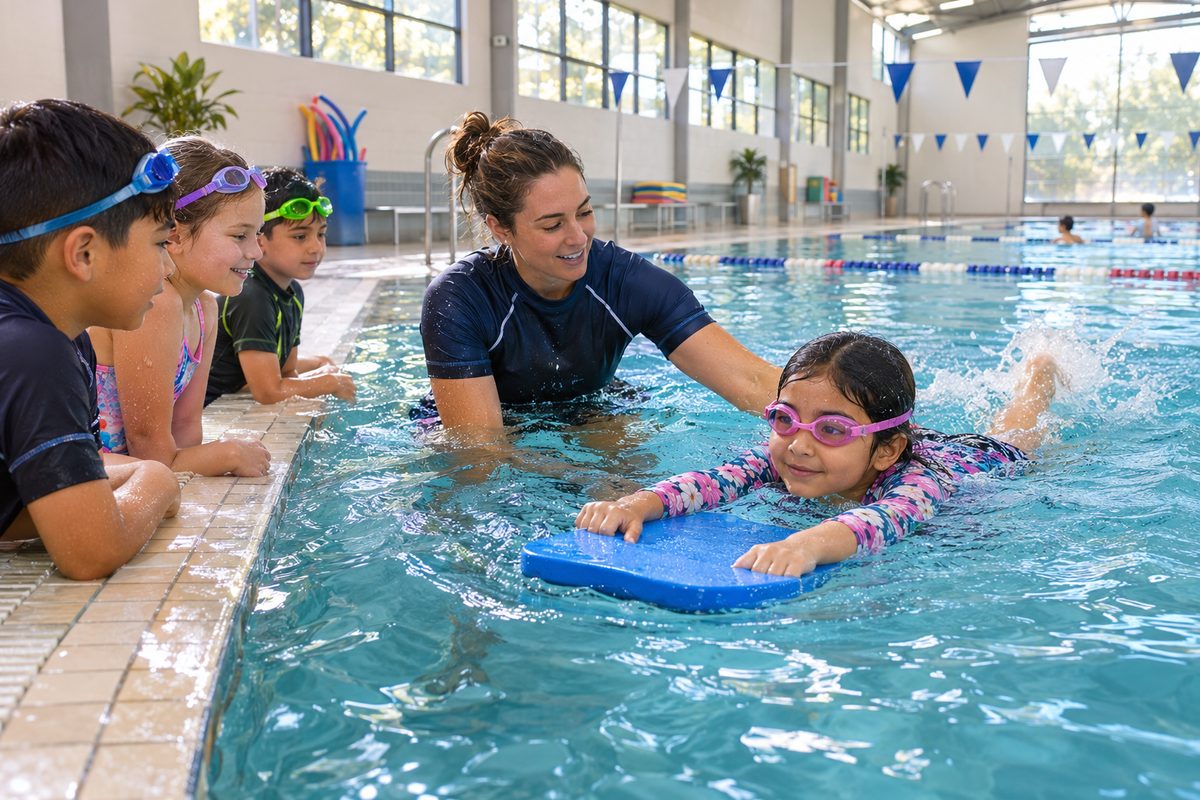
The best swimming lessons in Craigieburn match the swimmer’s current ability, teach safe habits before speed, and fit the family’s weekly routine. A nearby pool may look like the easy choice, but distance alone tells you little about lesson quality. Check how the program groups swimmers, what each level teaches, and how instructors report progress.
This guide from Craigieburn Fieldnotes explains how to compare local programs without relying on vague claims. It covers early lessons, school-age instruction, adult classes, stroke development and the practical details that decide whether a family can keep attending.
What should a good swimming program teach first?
A good program teaches control in the water before formal technique. Beginners need to enter and leave the pool safely, regain their feet, float, turn, breathe and move towards an exit. These skills give later stroke work a sound base.
Water confidence does not mean water safety. A child who enjoys splashing may still panic after an unexpected fall. Watch whether lessons include safe entries, floating without support, turning back to the wall and moving through the water in more than one body position.
The program should use clear stages. Each stage should have skills that an instructor can see and assess. Labels such as beginner or advanced are less useful than a written list of what a swimmer must demonstrate before moving up.
Progress may look slow at first. A nervous swimmer who puts their face in the water and exhales for several seconds has gained a useful skill, even if they have not crossed the pool. Pushing that swimmer into longer distances can build fear and poor breathing habits.
How do lessons change for an infant or toddler?
An infant class should focus on calm, supervised contact with water. The parent or carer usually joins the child in the pool. Sessions may use songs and repeated cues, but their purpose is familiarisation rather than independent swimming.
A toddler can begin following simple instructions, reaching for the wall and taking part in supported floating. The pace should remain gentle. Forced submersion is a warning sign. Children should receive a clear cue before going under, with the activity adjusted when they show distress.
Parents should treat early lessons as one layer of protection. They do not make a young child safe around a bath, backyard pool or open water. Close adult supervision and secure barriers remain essential.
Before enrolling, ask about minimum age, the required adult-to-child ratio and rules for swim nappies. Also ask how missed classes work. Young children often miss sessions through illness, so a strict make-up policy can affect the real value of a term.
What should school-age beginners be learning?
School-age beginners need a mix of water safety and efficient movement. A useful early sequence covers floating, controlled breathing, kicking, body position and short swims towards a safe exit. Instructors can then join those skills into a basic stroke.
Freestyle swimming is often introduced early because it builds steady kicking and coordinated breathing. Look for teaching that breaks the movement into parts. A child may first practise a long body line, then arm recovery, before adding side breathing. Repeating the full movement with poor form can make errors harder to change.
Backstroke helps swimmers become comfortable on their back and develop a straight body position. It also gives them another way to move if face-down swimming becomes tiring. Breaststroke usually needs more precise timing. Its kick can take time to learn because both legs must move together in a pattern that differs from normal walking or kicking.
The word stroke can hide several separate skills. Ask whether assessment covers breathing, body position, kick and arm action. A swimmer may travel 25 metres yet still need work on one part of the movement.
How can you tell whether a class level is right?
Ask for an assessment before booking when one is available. Age is a weak guide to swimming ability. Two children of the same age may differ in confidence, endurance and experience.
A suitable class should stretch the swimmer without leaving them lost. If every task is easy, progress may stall. If the swimmer cannot attempt most tasks without constant rescue or physical support, the class is likely too advanced.
Observe one lesson if the provider permits it. Check how much time swimmers spend moving. Long waits at the wall can reduce useful practice, especially in a short session. Also watch whether the instructor can see every swimmer and correct unsafe behaviour at once.
Class size needs context. A small class can still work poorly if ability levels vary too much. A slightly larger class may run well when swimmers share similar skills and the lane has enough space. Ask about the normal ratio, what happens when a substitute instructor takes over, and whether classes are combined when attendance is low.
What does useful progress look like?
Useful progress is steady, visible and tied to specific skills. A provider should be able to explain what the swimmer can do now, what comes next and what blocks promotion.
For a beginner, progress may mean floating without gripping an instructor. For a developing swimmer, it may mean breathing to the side without lifting the head. At a higher level, it could mean holding sound technique over a longer distance.
Moving up every term is not a sound measure by itself. Some skills take longer because they demand timing and body awareness. Butterfly stroke is a clear example. The wave-like body movement, simultaneous arm action and breathing pattern can fall apart when introduced before a swimmer has enough strength and control.
Ask how often formal assessments happen and whether feedback is available between them. Good feedback names one clear change. “Keep your head still during backstroke” gives the swimmer something useful to practise. “Try harder” does not.
When should swimmers move into squad training?
Squad training suits swimmers who can complete repeated lengths with reliable technique and follow instructions in a lane. It builds endurance, pacing and starts and turns. It is different from a standard learn-to-swim lesson, where the main aim is gaining or fixing core skills.
Competitive swimming is one possible path, not the required end point. Some swimmers join a squad to improve fitness or prepare for school sport. Others want races and club involvement. Ask whether the squad is designed for development, fitness or competition before choosing it.
A swimmer should not move up only because they can cover the distance. Poor form repeated over many laps can lead to frustration and make later correction difficult. The instructor should check whether technique remains stable as the swimmer gets tired.
Are adult swimming lessons worth taking?
Adult lessons are worth taking when fear, weak technique or low fitness limits time in the water. Adults do not need to reach a certain starting level. A well-run program can begin with entering the pool, putting the face in the water or learning to float.
Adults should ask whether the class is for beginners or stroke improvement. These groups need different teaching. A new swimmer may need quiet space in shallow water. Someone who already swims laps may need video feedback or drills for breathing and body position.
Private lessons can help when a person has strong water fear or a narrow technical goal. Group lessons may offer better value and regular practice. The right choice is the format that allows consistent attendance and enough direct feedback.
Embarrassment stops many adults from starting. It should not shape the decision. In a properly grouped class, every swimmer is there to learn a skill they do not yet have.
Which practical details matter in Craigieburn?
A program only works when the household can attend most weeks. Compare the full trip from home, school or work rather than the distance on a map. Afternoon traffic, parking and change-room time can turn a short lesson into a long outing.
If travelling by public transport, check the walk from the relevant station or bus stop as part of the decision. The Craigieburn line connects the suburb with other parts of Melbourne, but a rail trip may still require a bus connection or a substantial walk to the chosen pool. Use a current journey planner because routes and service times can change.
A leisure centre can be convenient when several household members want different activities in one visit. Yet pool conditions still matter. Ask which pool hosts the lesson, whether the teaching area is shared with public users and how the venue manages noise during busy periods.
Inspect the change rooms and pool access before paying for a long block. Families may need space for a pram, accessible entry or a private changing option. Confirm these features with the venue rather than assuming every facility has the same layout.
What should you ask before paying?
Start with the lesson structure and total cost. Fees may be charged by term, direct debit or a fixed lesson block. Ask what the price includes and whether registration, entry or assessment costs sit outside the advertised fee.
Then check the cancellation rules. Find out how much notice is required, whether make-up lessons expire and what happens when the centre cancels. These rules can matter as much as the weekly price for a family managing school events or illness.
Ask how instructors are supervised and what child-safety process the organisation follows. For current qualification details, request the provider’s written policy and verify claims with the relevant training or accreditation body. Do not treat a logo on a website as complete proof.
Use this booking checklist:
- Request an ability assessment or a clear description of the entry skills.
- Confirm the usual class size and how swimmers are grouped.
- Ask which safety skills and strokes the level covers.
- Read payment, cancellation and make-up rules before enrolment.
- Check travel time at the hour when the lesson will run.
- Confirm pool access and changing facilities that your household needs.
What warning signs should make you keep looking?
Keep looking if staff cannot explain what the class teaches or how promotion works. A polished booking page does not replace a clear learning plan.
Be cautious when every swimmer receives the same task despite large skill gaps. Beginners need close instruction. Stronger swimmers need tasks that protect technique while adding distance or speed.
Regular instructor changes can also slow progress, though an occasional substitute is normal. Ask how lesson notes are shared so the next instructor knows each swimmer’s current goals.
Promises that a child will become “water safe” after a set number of lessons deserve scrutiny. No course removes drowning risk. Swimming skill can reduce risk, but supervision and safe environments still matter.
How should you make the final choice?
Compare two suitable programs on teaching quality and real weekly effort. Give more weight to level placement, active practice time and clear feedback than to decorative facilities.
A hypothetical family choosing between a close class at an awkward hour and a slightly farther class after school should map the complete routine. If the closer option causes repeated late arrivals, the farther program may produce better progress because attendance is easier to sustain.
Use a trial lesson or short initial block when possible. Watch the swimmer after class. Healthy effort may leave them tired, but they should understand what they practised and feel able to return. Ongoing fear, confusion or idle time calls for a discussion with the coordinator.
What should you do now?
- Write down the swimmer’s current skills and one goal for the next term.
- Shortlist local programs that offer the matching level.
- Confirm class size, assessment methods and make-up rules in writing.
- Test the trip at the planned lesson time.
- Choose the class that makes safe, regular practice easiest to maintain.
Actionable takeaway: book an ability assessment before paying for a full term, then choose the program with the clearest skill path and the routine your household can keep.