Golden Sun Moth Park Craigieburn Guide
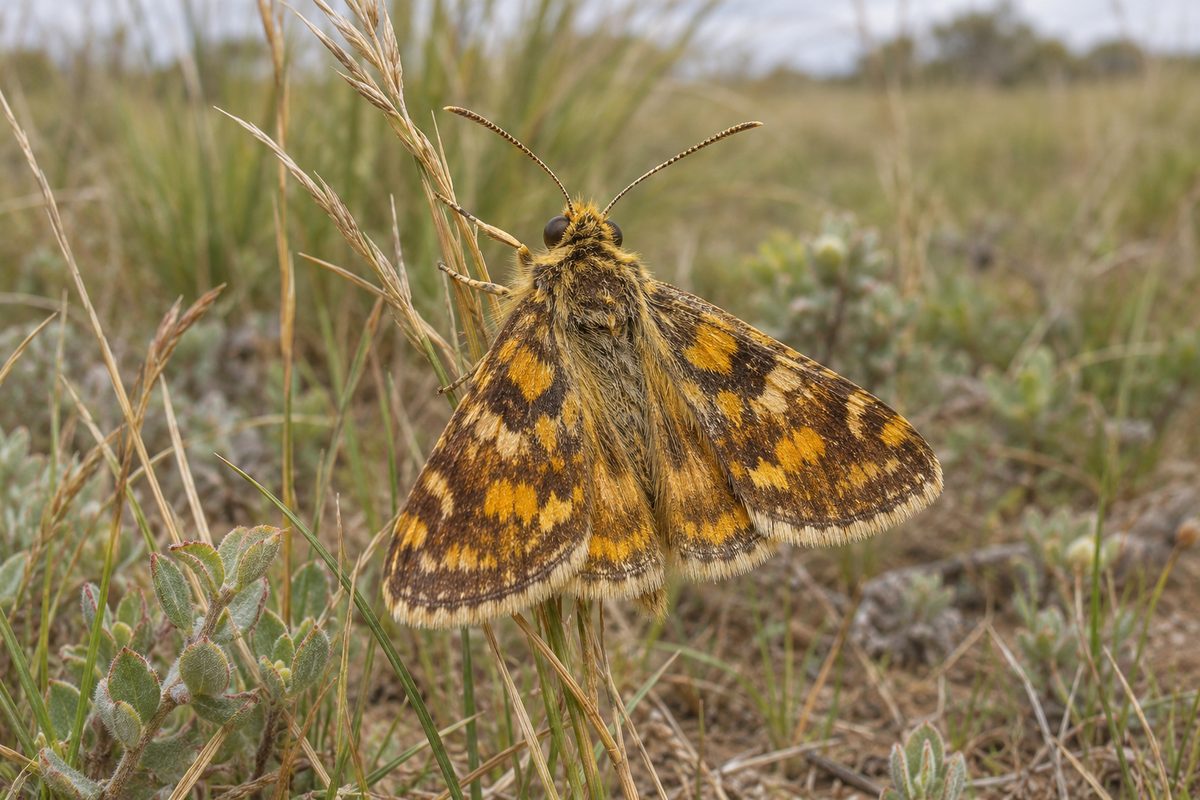
Golden Sun Moth Park is a council reserve on Craigieburn Road that pairs a neighbourhood playground with a protected patch of native grassland, and the only time you will see the moth it is named after is a warm, still day between November and early January. Outside those weeks it is an open-space walk with play equipment, and the grass looks like any other paddock. The moth is the reason that paddock survived in a growth suburb. Once you know how the insect lives, the rough grass stops looking neglected and starts looking deliberate.
What makes this park different from every other park in Craigieburn?
Most parks in Craigieburn, Victoria were built on cleared land and planted afterwards. Golden Sun Moth Park was shaped around something already living there. When the Highlands area on the western side of Craigieburn was planned, ecological surveys found a population of Synemon plana, the golden sun moth. Because the species is protected under federal and state law, habitat had to be set aside instead of being graded flat for housing. The reserve you visit today is that set-aside: a remnant of Victorian Volcanic Plain grasslands kept for the moth, with the playground and seating placed around its edge.
That split is the big idea of the place. The mown lawn and play equipment are for people. The tussocky, uneven grass marked by council signage is for the moth. The park only works if visitors can tell which zone they are standing in, and the rest of this guide is built around that difference.
When can you actually see a golden sun moth here?
Adults fly from roughly November to early January, and only when conditions suit them: sunny, warm, and with little wind, usually from late morning through mid afternoon. On a cool or overcast day they stay down in the grass and you will see nothing.
The adult stage is brutally short. Golden sun moths have no working mouthparts, so they cannot feed, and most live for only a few days. Males spend that time flying low, often less than a metre above the ground, in a zigzag search pattern across the grassland. Females barely fly at all. They sit among the tussocks and flash their bronze-orange hindwings to attract a passing male. That flash of colour against brown grass is the thing to watch for.
Size matters for spotting them. The wingspan is around three centimetres, so from a path you are looking for a small, dark, fast-moving shape skimming the grass rather than anything that looks like a butterfly on a flower. Bring binoculars if you have them. Do not step into the grassland to get closer.
A labelled hypothetical shows the contrast. Imagine a family arriving at 2 pm on a 27-degree December afternoon with light wind. Within ten minutes of standing quietly at the grassland edge, they would have a good chance of seeing several males patrolling and perhaps a female signalling. Now imagine the same family on a grey 17-degree morning in the same week. They would almost certainly see no moths at all and might assume the park is misnamed. Same place, same week, completely different result. Timing is everything with this species.
Why does a moth in a suburban park have federal protection?
Synemon plana is listed as Critically endangered under the Environment Protection and Biodiversity Conservation Act 1999, the highest threat category before a species is considered extinct in the wild. It is also listed as threatened in Victoria under the state's Flora and Fauna Guarantee Act 1988. For an insect in a city park, that is an unusual level of legal weight, and the reason is habitat rather than the moth itself.
The larvae live underground for an estimated one to three years, feeding on the roots of native wallaby grasses (Rytidosperma species). Those grasses are the backbone of the natural temperate grassland of the Victorian Volcanic Plain, which stretches west and north of Melbourne and is itself listed as a critically endangered ecological community under the same Act. Less than one per cent of that grassland remains in anything close to its original state. Craigieburn sits right on it, which is why so many reserves in the City of Hume are grassland rather than bushland.
Two biological facts make this endangered species especially fragile. First, because females hardly fly, the moth cannot recolonise a site once a local population is lost. A patch bulldozed in Craigieburn is not replaced by moths drifting in from Sunbury. Second, the long larval stage means a single bad management decision, such as deep ripping or a thick blanket of herbicide, can wipe out several years of moth generations that nobody can see. The adults you watch in December are the survivors of a process that began underground around 2023.
How do you get to Golden Sun Moth Park?
By train. Craigieburn railway station is the terminus of the electrified metropolitan Craigieburn line and also a stop for V/Line services heading north towards Seymour. The train station sits beside the Hume Highway on the eastern side of central Craigieburn. The park is west of there along Craigieburn Road, several kilometres away, so plan a bus, bike or short drive from the station rather than a walk with young children. Check Public Transport Victoria for current bus routes and times; this guide does not reproduce timetables.
By car. Craigieburn Road is the east-west spine of the suburb and the park fronts it. Coming from Melbourne's north, you have two very different roads with similar names. The Hume Highway is the older arterial that runs through the middle of Craigieburn, past the shops and the station, with traffic lights and local turn-offs. The Hume Freeway is the controlled-access highway that bypasses the town to the east, with no direct property access and exits only at interchanges, including one at Craigieburn Road. If your navigation app says Hume Highway, expect suburban driving. If it says Hume Freeway, you will leave at the Craigieburn Road interchange and head west through town.
By bike or on foot. Craigieburn Road carries heavy traffic. Use the shared paths and local streets through the Highlands area where possible rather than riding on the arterial. For current details on entry points, parking and path surfaces, check Hume City Council's park listing before you go. Those details change as estates fill in, and inventing them would be worse than leaving them out.
What should you do inside the grassland, and what should you leave alone?
The practical rules are simple and they all follow from the biology above.
- Stay on formed paths and mown edges. Larvae are in the soil under the tussocks. Trampling compacts the ground and damages the root zone they feed on.
- Never catch, net or handle a moth. Taking a listed species without a permit is an offence under the Environment Protection and Biodiversity Conservation Act 1999 and under Victorian law. Photograph from the path.
- Keep dogs on a lead and out of the grassland zone. A dog running through tussocks in December flushes flying males and crushes sitting females.
- Do not pick grasses or wildflowers. Wallaby grass seed heads look like nothing special. They are the whole food supply.
- Do not tidy, mow or weed on your own initiative. Well-meaning residents sometimes pull plants they think are weeds. Leave that to council staff, for a reason explained below.
- Record what you see. Upload sightings with a date and photo to iNaturalist or the Atlas of Living Australia. Flight-season records from public reserves genuinely help monitoring.
Nature conservation in a reserve this small is active, not passive. The City of Hume has to manage grass biomass so the tussocks stay open with bare soil between them, which is what the moth needs. That can mean carefully timed slashing or ecological burns outside the flight season. The council also runs weed control against invaders such as serrated tussock, phalaris and Chilean needle grass that would otherwise crowd out the natives.
Here is the twist that catches people out. Golden sun moth larvae have been recorded feeding on the roots of Chilean needle grass, an introduced weed, at some Victorian sites. So a site manager cannot simply spray every needle grass plant in one pass without risking the larvae living under it. Weed control around this moth is staged and selective, replacing weeds with natives over several seasons. If you see a patch of weeds left standing in the reserve, that may be deliberate rather than lazy.
What do most write-ups of this park get wrong?
They treat it as only a playground. The play space is good and busy, but reviews that never mention the grassland miss the reason the park has its name and its shape.
They read rough grass as neglect. Long, rank, dense grass is bad for the moth because males cannot see females signalling and larvae struggle under heavy thatch. A freshly slashed or burnt reserve looks bare for a few weeks and is actually the right condition. Judge the grassland by the gaps between tussocks, not by how green it is.
They say visit any time. You can enjoy the park year round, but the moth is visible for around six to eight weeks a year and only in the middle of warm days. Anyone promising moths in March or at 8 am is guessing.
They confuse this reserve with the big one. The Craigieburn Grassland Nature Conservation Reserve is a much larger Parks Victoria site to the south along Merri Creek, with its own access rules. Golden Sun Moth Park is a small council reserve inside a housing estate. Both protect the same type of Victorian Volcanic Plain grasslands, but they are different places with different managers. Further north, the Melbourne suburb of Mount Ridley, also within the City of Hume, has grassland patches of its own; do not confuse it with the peaks of the same name overseas when searching online.
They swap the highway and the freeway. Directions that say take the Hume Highway when they mean the freeway, or the reverse, send visitors to the wrong side of town. The highway goes through Craigieburn; the freeway goes around it.
How does the park fit into a wider Craigieburn visit?
Because the moth flies from late morning onward, the park suits a late start. Arrive around 11 am in the flight season, spend an hour at the grassland edge and the playground, then head back east along Craigieburn Road for lunch. Craigieburn Fieldnotes covers the suburb's cafes and restaurants separately, so this guide will not repeat that ground.
If you are visiting on a weekend during the football season, Hume City FC, the National Premier Leagues Victoria club that carries the municipality's name, plays home matches at ABD Stadium in Broadmeadows, a short drive south along the Hume Highway. A grassland walk in the middle of the day and an evening match works well as a full day in the City of Hume. Check the club's fixture list for dates rather than assuming a home game.
For a quieter pairing, continue to the Craigieburn Grassland reserve on Merri Creek to see the same ecosystem at a scale where kangaroos and raptors show up alongside the moth habitat. Seeing the large reserve after the small one makes clear what the small one is a fragment of.
Action points
- Pick a day between late November and early January with a forecast above about 24 degrees, sunshine and light wind, and arrive between 11 am and 3 pm.
- Before leaving home, check Hume City Council's listing for Golden Sun Moth Park for the current entrance and parking, and Public Transport Victoria if you are coming from Craigieburn railway station.
- Stand at the mown edge of the grassland and watch low over the tussocks for small dark males zigzagging and for the orange flash of a female. Give it at least ten quiet minutes.
- Keep children and dogs on the paths and the lawn. Photograph, never touch.
- Upload any sighting with date and location to iNaturalist or the Atlas of Living Australia so the record counts for monitoring.
- If the grassland looks freshly slashed or burnt, or has weeds left standing, assume it is managed that way on purpose and do not report it as neglect without first checking with the council.