Craigieburn Library Activities for Children
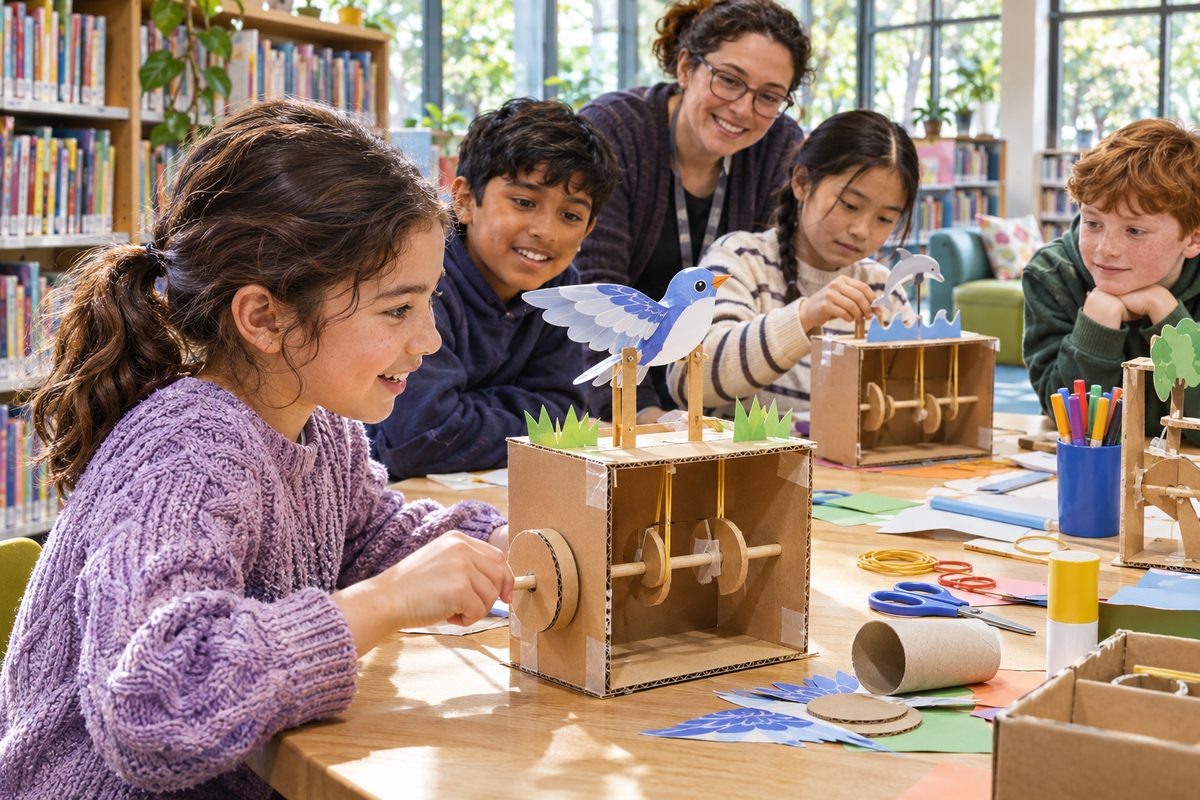
Craigieburn Library, inside the Hume Global Learning Centre on Central Park Avenue, runs free children's programs from babies through to teens, including rhyme time, storytime, school holiday activities and a Summer Reading Club, all on a free Hume Libraries membership. The building in Craigieburn, Victoria is one of the best public libraries in the country for families. It won International Public Library of the Year in 2014, and its children's area was designed as a place to stay rather than a place to grab a book and leave. This guide explains what the activities are, who each one suits, and how to get more from them than a single storytime visit. Check the current program on the Hume Libraries website before you go, because session days change each term.
What actually runs for kids across a normal week?
The program is set by Hume Libraries, the council library service of the City of Hume, and it changes each school term. Most of the year it sorts into four age bands.
- Babies and crawlers. Rhyme and song sessions where a parent holds the child on their lap. Short, repetitive, and led by staff who model the actions.
- Toddlers and preschoolers. Storytime built around a picture book or two, with songs and a simple craft at the end.
- Primary school children. After-school and holiday programs such as building challenges, craft, coding and author visits.
- Teens. Study space, graphic novels and holiday workshops pitched at older kids.
Outside the timetabled sessions, the children's area works on its own. Low shelves hold the picture book collection face-out so a four-year-old can choose without help. There are places to sit on the floor, and the courtyard gives a change of scene when a toddler needs to move. Because the library sits inside the Hume Global Learning Centre, a council customer service desk and a cafe share the building. One trip can cover a rates payment and a storytime.
Why do rhyme sessions do more than they look?
Rhyme time builds phonological awareness, and phonological awareness is one of the strongest predictors of how easily a child learns to read. The term means hearing the sound structure of words: that 'cat' and 'hat' share an ending, or that 'sun' starts with the same sound as 'sock'. Children who can hear these patterns before school find phonics lessons far easier, because the teacher is naming sounds the child already notices.
The evidence is consistent across decades. The US National Reading Panel review in 2000 found that training in sound awareness improved reading and spelling across age groups, and Australian early-years research reaches the same conclusion. Nursery rhymes work because they repeat sound patterns with rhythm, and rhythm helps memory. A rhyme session also gives a parent twenty minutes of modelled practice they can copy at home that night.
A labelled hypothetical makes it concrete. Picture a two-year-old who attends rhyme time most weeks for a year. By three, that child can finish the last word of a familiar rhyme and clap along to syllables. Those are the skills a prep teacher checks in the first weeks of school. A child without that exposure can still catch up, but the one who arrives with it starts reading instruction with a head start that cost nothing.
How do you pick between storytime, rhyme time and the holiday program?
Match the activity to what your child needs this term, not to their age alone.
- Choose rhyme time when the goal is listening skills and routine. It suits babies and young toddlers, and it also suits an older toddler who struggles to sit still, because the sessions are short.
- Choose storytime when your child can follow a picture book from start to finish. The craft at the end is a bonus. The listening is the point.
- Choose holiday programs when school-aged kids need structure in the break. These sessions usually need a booking through the Hume Libraries events page, and the popular ones fill fast.
- Choose free browsing when your child is reluctant. A kid who picks a book about trucks reads more than a kid handed a book about letters.
Session days and times shift between terms, so treat any schedule you see online as a prompt to check, never a promise.
What if your family speaks Punjabi at home?
Use the home language first. The 2021 Census lists Punjabi among the most common languages spoken at home in Craigieburn, and Hume Libraries holds community language collections for the area it serves. Ask at the desk for Punjabi language picture books and for bilingual titles that print both languages on the page. Reading to a child in Punjabi builds the same phonological awareness as reading in English, and the skill transfers: a child who can hear rhyme in one language hears it in the other.
The research backs this. Studies of bilingual children show that strong first-language literacy predicts stronger second-language reading, not weaker. The common worry, that home-language reading will slow English, runs the wrong way.
A labelled hypothetical: a grandparent who reads Punjabi well but speaks little English can run the bedtime story every night with a library book, while the parents cover English storytime on the weekend. The child gets two literacy routines instead of one. If the Craigieburn shelves do not hold enough Punjabi titles in your child's age range, ask staff about reserving items from other Hume branches. Books move between Broadmeadows, Sunbury and the other branches on request.
How does the Summer Reading Club stop the holiday slide?
The Summer Reading Club is a free holiday program where children register, log the books they read over the long break, and collect small rewards for milestones. Hume Libraries has run it over the Christmas holidays alongside other Victorian public libraries. Details for each year appear on the Hume Libraries website toward the end of Term 4, and the registration form is usually simple enough for a seven-year-old to fill in with help.
It matters because of the summer slide. Research on reading loss over long school breaks, mostly from the US where the break is longer, shows children who read little across the holidays return to school behind where they left. Children who read a handful of books across the break hold their level or improve. Six weeks is enough for the gap to show up in Term 1 reading groups.
The club works because it turns reading into a visible count. Children like filling in a chart. The books do not need to be hard. A stack of easy picture book titles a child reads alone counts the same as a chapter book read with a parent, and the easy ones do more for confidence.
What do most guides to the library get wrong?
Four things come up again and again.
- They treat storytime as the whole program. It is one slot in a term timetable. The holiday programs, the Summer Reading Club and the open children's area each deliver more hours of use across a year.
- They assume you need a City of Hume address. Membership with Hume Libraries is free, and you do not need to live inside the City of Hume to join. Families across the council line in Wollert and Donnybrook use Craigieburn because it is the closest big branch. Mount Ridley families are inside Hume anyway; that is the Melbourne suburb north of Craigieburn, not a mountain somewhere else.
- They assume everything is drop-in. Some rhyme and story sessions are. Holiday workshops with materials, visiting authors and anything with a capped group size need a booking, and bookings open before the holidays start.
- They skip the collection. The children's literature shelves run from board books through to young adult, with graphic novels, non-fiction and audiobooks in between. A child who will not sit for a story may still read a graphic novel a day.
One more angle most guides miss: sport as the way in. If your child would rather be at a Hume City FC match in Broadmeadows than in a book bay, start there. Ask staff for soccer picture books and junior non-fiction on how the game works. Interest drives reading volume, and reading volume drives reading skill. A library card that only ever borrows sport books is a library card that works.
When is State Library Victoria worth the trip instead?
Use Craigieburn weekly and State Library Victoria a couple of times a year. The State Library in Swanston Street is a destination, with exhibitions and children's programs pitched at a day out in a building that is itself the attraction. Craigieburn Library is the borrow-and-return branch where the routine happens. The Craigieburn line runs from Craigieburn station into the city, which makes the state library an easy school holiday outing without a car. State Library Victoria also offers free online resources to Victorians, so a Hume Libraries card and a State Library membership together cover more than either alone.
Action points
- Join Hume Libraries online or at the Craigieburn desk this week. It is free.
- Check the current term's program on the Hume Libraries website and pick one weekly session that matches your child's listening skills rather than their age.
- Borrow eight to ten books on each visit, including at least two in your home language if it is not English.
- Put the Summer Reading Club registration date in your calendar for late Term 4.
- Book holiday programs the day bookings open.
If you do one thing, take your child to one rhyme or story session this term and borrow a pile of picture books on the way out. For more on living in the area, read the rest of Craigieburn Fieldnotes.